China's Mortgage Debt Bubble Raises Spectre Of 2007 US Crisis - Zerohedge

“Almost all my friends born since the 1980s and 1990s are racing to buy homes, while those who already have one are planning to buy a second,” Mai, 33, said.
 
“Very few can be at ease when seeing rents and home prices rise so strongly, and they will continue to rise in a scary way.”
 

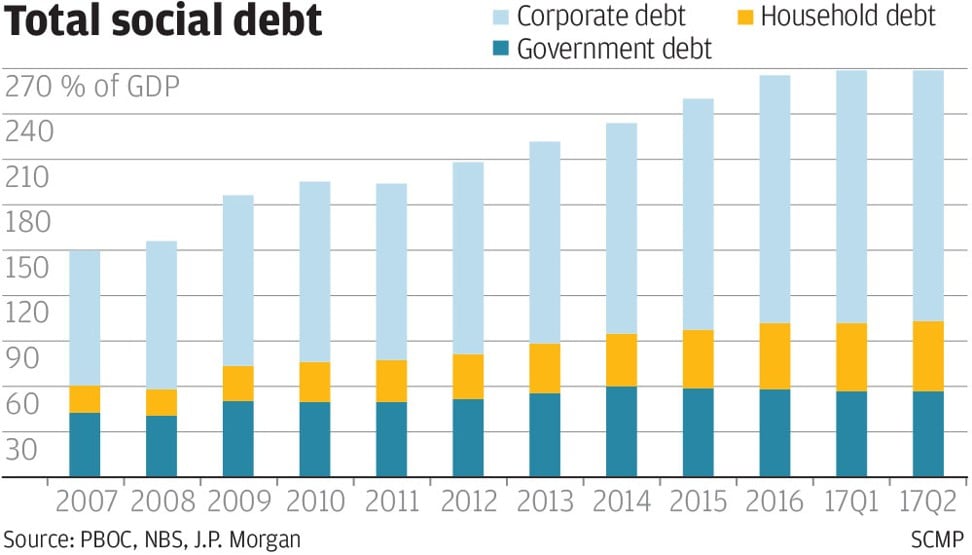
The rush of millions young middle-class Chinese like Mai into the property market has created a hysteria that eerily resembles the housing crisis that struck the United States a decade ago. Thanks to the easy credit that has spurred the housing boom, many young Chinese have abandoned the frugal traditions of earlier generations and now lead a lifestyle beyond their financial means.
 
Source: China's Mortgage Debt Bubble Raises Spectre Of 2007 US Crisis - Zerohedge

Comments

Popular posts from this blog

Letter: Why the geopolitics of international currency choice matters - FT

This coincidence must alert readers that a tempest is brewing on subjects noted: lurking inflation, increasing debt, suppressed interest rates and the shifting of hegemonic power.  There are only two important questions in investing that also apply to subjects impacting the future stability of the world — tell me why and tell me when.  Plender gives us the “why”, the ever-increasing “intolerable burden” of government debt and suppressed rates leveraging the global financial system. He gives us the tipping point.  What we await is “the when”, as in when do we know we have “tipped”.  Paul Hackett Madison,  NJ, US    Letter: Why the geopolitics of international currency choice matters
How The Economic Machine Works by Ray Dalio - Bridgewater

Source: How The Economic Machine Works by Ray Dalio

Best of the week - FT

  Bondi attacks show old hatreds are flourishing again — Stephen Bush The worried investor’s guide to 2026 — Katie Martin We urgently need to rebalance EU-China relations — Emmanuel Macron The argument Iranians have in private — Najmeh Bozorgmehr The hard politics of climate overshoot — Pilita Clark