You're Just Not Prepared For What's Coming - Zerohedge


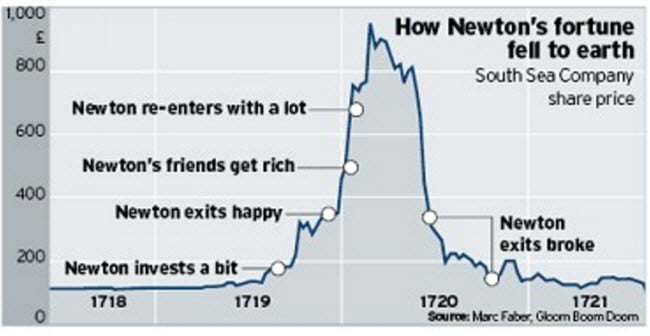
These bubbles – blown by central bankers serially addicted to creating them (and then riding to the rescue to fix them) – are the largest in all of history. That means they're going to be the most destructive in history when they finally let go.
Millions of households will lose trillions of dollars in net worth. Jobs will evaporate, causing the tens of millions of families living paycheck to paycheck serious harm.
These are the kind of painful consequences central bank follies result in. They're particularly regrettable because they could have been completely avoided if only we’d taken our medicine during the last crisis back in 2008.  But we didn't. We let the Federal Reserve --the instiution largely responsible for creating the Great Financial Crisis -- conspire with its brethern central banks to 'paper over' our problems.
So now we are at the apex of the most incredible nest of financial bubbles in all of human history.

Comments

Popular posts from this blog

How The Economic Machine Works by Ray Dalio - Bridgewater

Source: How The Economic Machine Works by Ray Dalio

Letter: Why the geopolitics of international currency choice matters - FT

This coincidence must alert readers that a tempest is brewing on subjects noted: lurking inflation, increasing debt, suppressed interest rates and the shifting of hegemonic power.  There are only two important questions in investing that also apply to subjects impacting the future stability of the world — tell me why and tell me when.  Plender gives us the “why”, the ever-increasing “intolerable burden” of government debt and suppressed rates leveraging the global financial system. He gives us the tipping point.  What we await is “the when”, as in when do we know we have “tipped”.  Paul Hackett Madison,  NJ, US    Letter: Why the geopolitics of international currency choice matters

Reading the runes on a Warsh Fed - Martin Wolf - Financial Times

Intellectually, at least, today’s Warsh appears the same as the one of 2010. In his IMF lecture delivered in April 2025, he stressed not only the Fed’s “institutional drift”, but also its recent “failure to satisfy an essential part of its statutory remit, price stability. It has also contributed to an explosion of federal spending. And the Fed’s outsized role and underperformance have weakened the important and worthy case for monetary policy independence.” He made other criticisms, the most pointed being that “the Fed has been the most important buyer of US Treasury debt — and other liabilities backed by the US government — since 2008”. He asserts: “Fiscal dominance — where the nation’s debts constrain monetary policymakers — was long thought by economists to be a possible end-state. My view is that monetary dominance — where the central bank becomes the ultimate arbiter of fiscal policy — is the clearer and more present danger.” For Warsh, then, easy money is the road to ruin.  ...